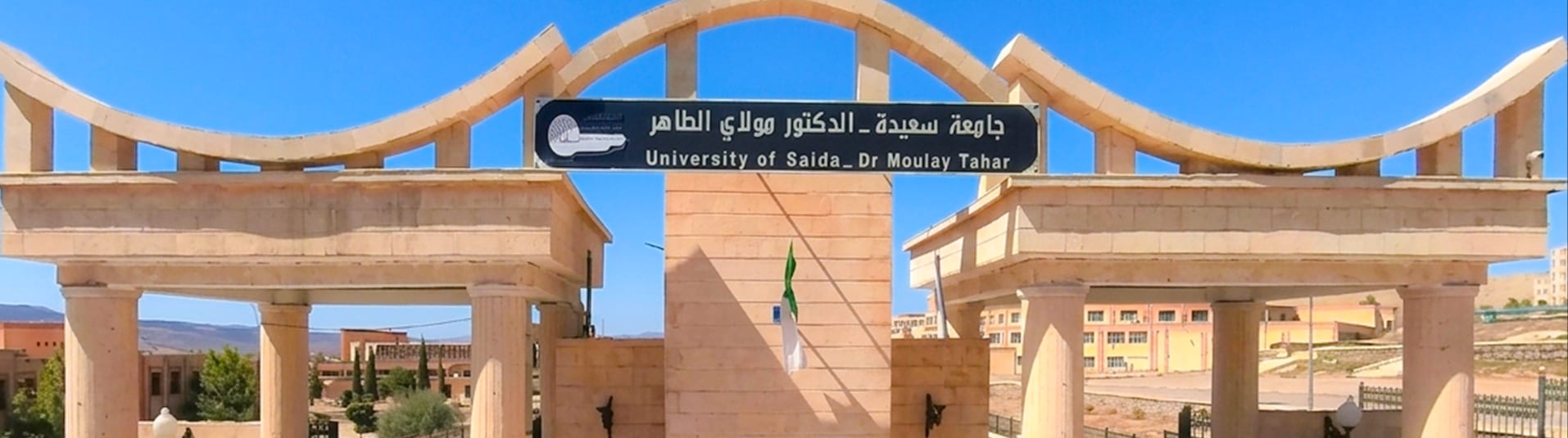

A wilaya on the Western High Plateaus, Saida has been home to University of Saida Dr Moulay Tahar since 1986. A short guide for new students and visitors.
Saida lies on Algeria's Western High Plateaus, about 170 km south of Oran and 380 km south-west of Algiers. The city sits at 910 m elevation on the southern foothills of the Tell Atlas, in a transition zone between the Mediterranean coast and the first alfa-grass steppes.
The wilaya has around 170,000 inhabitants according to recent estimates, spread across 16 municipalities and six daïras. The city itself is the wilaya's administrative, economic and academic centre, and hosts the second-oldest university in south-western Algeria.
The local economy is driven by agriculture (cereals, vines, alfa grass), horse-breeding at the historic Chaouchaoua stud farm, mining around Djebel Onk, and by the service sector and public administration. The city is also shaped by its growing university scene, with more than 12,000 students spread across eight faculties.
The region has been inhabited since antiquity; the Romans established a post called "Ad Speluncas" ("by the caves") not far from the modern town. Ruins and inscriptions in the area around the old citadel still testify to that period.
In the 19th century Saida served as a fortified base for Emir Abdelkader during his resistance to the French conquest. He made the naturally defensible region the refuge of his Smala, his mobile capital. After the Smala fell in 1843, French colonists founded the modern town in 1854, with its military layout and the railway line linking it to Oran.
After independence in 1962 Saida saw significant industrial development, with alfa-grass and paper mills opening in the region. The university centre was founded in 1986 and upgraded to a full university in 2009. Today the town blends its colonial architecture with a new generation of public buildings.
A short, focused selection for new students, campus life, nature, and the city's historic landmarks.
The university's main site gathers eight faculties, student residences, cultural venues and sports facilities. Open to students throughout the week.
National stud farm dating to the colonial era, specialising in the Arab-Barb horse. Visits are possible and seasonal equestrian displays are held.
A vast forest of Aleppo pine and holm oak close to town, a favourite spot for hiking, running and student outings.
One of the architectural landmarks of the city centre, with its distinctive minaret and wide forecourt. An obvious reference point for getting around.
The historic commercial heart: cafés, bookshops, clothing stores, and the covered market for affordable fruit and vegetables.
Train station on the Oran-Béchar line, plus a multi-service coach terminal serving Oran, Algiers, Mostaganem, Tlemcen and Sidi Bel Abbès.
Three historic pillars of the local economy, alongside university services and public administration.
Saida is one of Algeria's leading alfa-grass producing regions. This steppe grass is used to make paper, ropes and traditional basketry.
Cereals and vines on the northern plains, sheep and goat herding on the southern steppes. Regional self-sufficiency in red meat.
The region hosts several thermal stations (Hammam Rabbi, Hammam Sidi Aïssa), nationally known for their curative and tourist appeal.
What every student arriving in Saida needs to know: budget, housing, transport and climate.
Saida is among Algeria's most affordable university cities: the subsidised student meal ticket costs 1.5 DZD, while a meal off campus ranges from 150 to 400 DZD. On-campus housing is free for out-of-wilaya students.
Two options: the ONOU student residences (priority for out-of-wilaya students), or private rentals in town (8,000-15,000 DZD per month for a shared room).
Train: the Oran-Béchar line serves Saida daily. Bus: regular services to Algiers (6 h), Oran (2 h) and Mostaganem. Car: national road RN6 and the East-West highway.
Mediterranean continental climate: hot, dry summers (30-38 °C), cold winters with occasional snowfall (0-12 °C). Spring and autumn are the most pleasant seasons; a warm coat and waterproof shoes are recommended from December to February.
The official Algerian National Tourist Office site has detailed regional destination dossiers, including Saida and its thermal stations.